
Education is Key to Helping Oncology Patients Navigating Evolving Medicare Part D Landscape
Published Date: October 14, 2025

Education is Key to Helping Oncology Patients Navigating Evolving Medicare Part D Landscape
Changes in 2025 to Medicare Part D created both benefits and challenges for oncology patients, according to healthcare professionals at the 2025 NCODA Oncology Institute in Chicago. Moving forward, there’s an opportunity for manufacturers to assist practices in educating patients about the evolving landscape.
The session, “How Patients are Accessing Medications & What it Means for Oncology Practices,” featured:
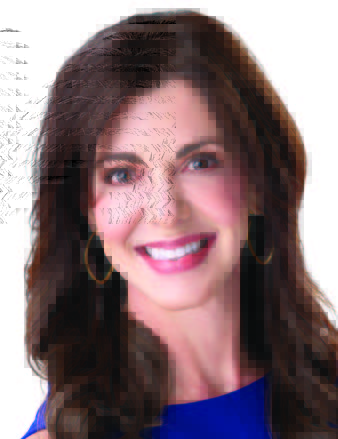
Kathy Oubre, MS
Chief Executive Officer, Pontchar-train Cancer Center
and Editor, Evidence-Based Oncology
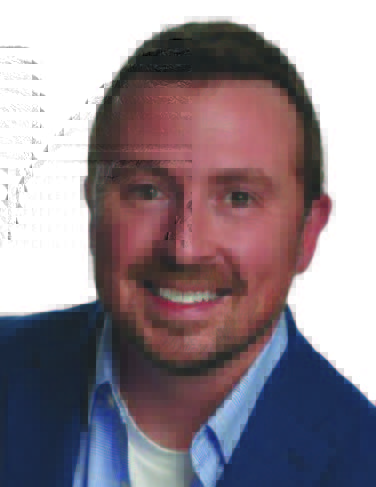
Nick Bouchard, PharmD
Director of Pharmacy Services, Hematology-Oncology Associates of Central New York
and Executive Council Member, NCODA
Oubre and Bouchard reviewed concerns with the 2025 Part D program and offered suggestions for the coming year:
WHAT DID THE CHANGES IN MEDICARE PART D MEAN FOR YOUR PATIENTS?
NB: “Overall, it was generally positive. We saw a presentation that only 10% of patients hit that $2,000 out-of-pocket (OOP) max, but we know in our practices it’s probably closer to 100%. For them, it was definitely a benefit. There was a cost reduction. We did see more patients better able to afford their medications.
“We did see a subsequent change in some of the manufacturer’s assistance programs simultaneously because now that patients can afford their medications, it makes it a little harder for them to qualify for the free drug programs because the poverty threshold is lower. In the beginning, it was a little bit rocky. We had patients on manufacturer assistance programs who no longer qualified, so we had to pull them back into the practice. It was great that we were able to provide them care at that point, but they were previously being provided a drug and now they had to pay the $2,000. Navigating that initially was a little bit bumpy, but things have smoothed out over the year.
“We have been educating our patients on what those max OOPs are, and we’ve been talking about the smoothing program (allowing Part D beneficiaries to spread out-of-pocket prescription drug costs across the entire year instead of paying large amounts upfront) with them as well. And more patients can afford that monthly payment than they can the $2,000 upfront.
“But now we’re reversing back. There are four months left in the year as we come in to September. Now, it’s not $167 a month anymore, it’s $500 a month for the remaining four months to equal the $2,000 So, we’re starting to see an uptick again to patients reaching out to manufacturers for assistance.”
KO: “The $2,000 OOP max was great for our patients. We saw more patients be able to afford their care and they were adherent, which was a big win for us. But smoothing went over like a lead balloon for us.”
NB: “Same for us. I was kind of surprised. When I heard about the smoothing program, I thought more patients would take advantage of it. But I can probably count on one hand the number who did rather than just paid that full copay. I don’t know the exact reason why that was, but that was the preference at our practice.
KO: “We saw a huge disconnect. The way smoothing was supposed to work is that the plans were supposed to identify the patients, based on the previous plan year, who they thought would benefit from the program. They were supposed to proactively reach out to them. That may or may not have happened. The plans were also required to educate the patients about the smoothing option. For example, the information may have been on Page 32 of the patient’s insurance plan packets, in small print. The plans were technically fulfilling requirements, but they were flawed.
“There was also a lack of industry-wide agreement on the correct name of this program. Many people refer to it as “Smoothing” or “M3P,” while the official term from CMS is Medicare Prescription Payment Plan. And in many cases, when patients called their insurer to opt-in, the customer service representatives were unfamiliar with the plan.”
NB: “It was very confusing for our patients, too. When you enrolled in the smoothing program, and let’s say you got a grant. Now you’d have to disenroll so we could apply the grant towards their deductible, which was also complicated.”
KO: “Smoothing was a separate bill from the plan, and that was confusing. We had to educate patients that if they ran into financial issues, to pay that Part D premium and just go sideways on the smoothing. You don’t want to do either, because you might possibly be removed from smoothing, but it’s much better than being removed from Part D altogether. I think a lot of our patients got very nervous about that and tried to afford the $2,000.”
HOW ARE YOU EDUCATING PATIENTS FOR 2026?
NB: “We are having discussions with patients who are at their max to let them know their premium is going up to $2,100 next year and to prepare for that. We’re not educating a lot about smoothing because I don’t think we’re going to get a lot of uptick next year, either. The difference between the $2,000 and the $2,100 isn’t drastic, so I would expect to see similar results next year.”
KO: “It’s a good program in theory, but in practice, the juice isn’t worth the squeeze.”
“(Smoothing) is a good program in theory, but in practice, the juice isn’t worth the squeeze.”
– Kathy Oubre, MS, Chief Executive Officer, Pontchartrain Cancer Center
WHAT WAYS CAN WE WORK TOGETHER TO EDUCATE PATIENTS?
KO: “Some manufacturers do amazing open enrollment education. Even if I’m not going to hand out the branded open enrollment — because that always makes me a little uneasy — I think your information is amazing. I love it. I take it apart and make it my own. I’d love to see manufacturers do a better job of educating practices about your non-branded resources. In many cases, it can help alleviate some of our burden to better educate our patients. Please come to us with it, sooner rather than later. I’m already starting to design my educational materials and we’re starting open enrollment appointments on Oct. 16.
“We do open enrollment counseling at my organization and it’s been very helpful. At our provider meetings, we talk about the patients who are having adherence problems or financial issues as we look at next year’s open enrollment. Is the plan they’re currently on the best one for them? If not, we use this time as an opportunity to education patients and their families about the different options which may better suit their healthcare needs.
“In many cases, it’s difficulty understanding all of their insurance options. Several years ago, we developed our Open Enrollment Education program. And it went well, but it didn’t help everyone. So, we had to go back to the drawing board and brought in some patients and caregivers who collaborated with us. Now, we have two sets to better suit patients with various health literacy levels.”
NB: “We use some of the unbranded tear-off sheets to explain some of the smoothing because it’s a difficult (concept) … to explain to patients. They’re very helpful. We put them right in their prescription bags at the time of pickup before 2025 started so they had something to refer to and look at as well.”